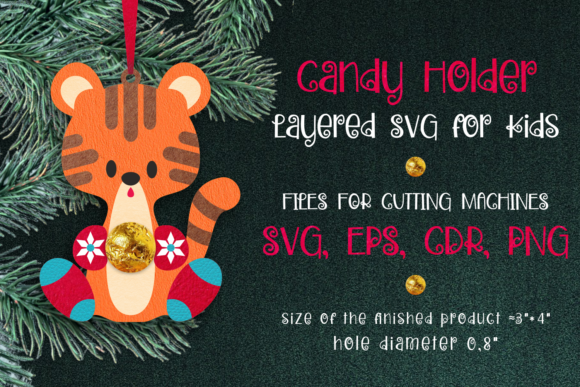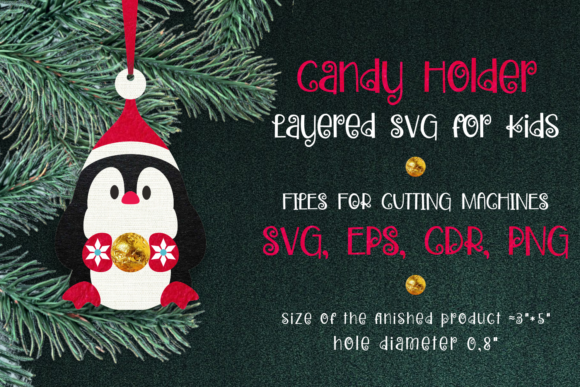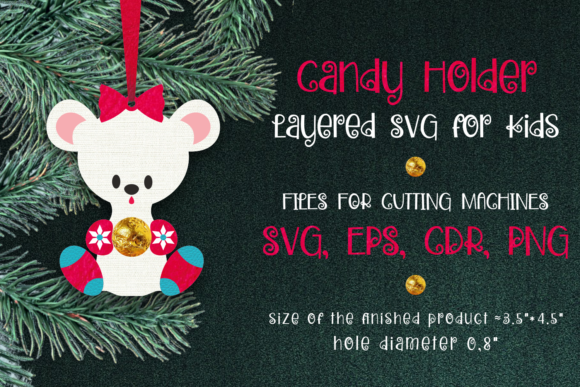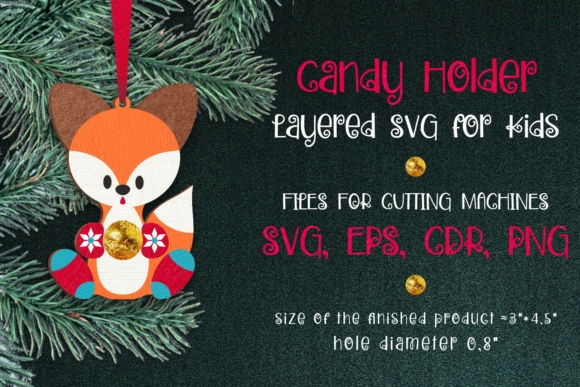
Candy Holder Christmas Ornament Rabbit
The Candy Holder Christmas Ornament Rabbit represents a specific intersection of seasonal decoration and interactive crafting. As a digital product designed for cutting machines, this file offers users the ability to transform flat materials into three-dimensional holiday decor. Unlike pre-made ornaments purchased from retail stores, this digital asset requires the user to possess specific software and hardware capabilities to bring the design to life. The core value proposition lies in customization; it allows crafters to select their own paper textures, colors, and fillings, creating a unique piece that reflects personal taste rather than mass-market production.
Understanding the Digital Asset
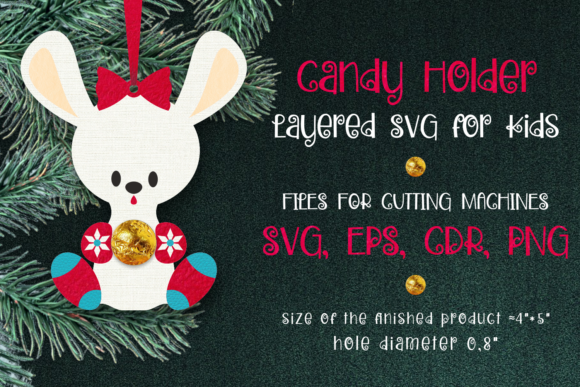
At its foundation, the Candy Holder Christmas Ornament Rabbit is a vector-based design file. It is not a physical object but a set of instructions for a machine cutter, such as a Cricut or Silhouette. The design features a multi-layer structure, meaning the final rabbit ornament is assembled from several distinct cut pieces that interlock or stack to create depth. This complexity distinguishes it from simple single-layer decals or stickers.
The package includes four primary file formats: CDR, EPS, SVG, and PNG. Each format serves a specific technical purpose within the crafting workflow:
- SVG (Scalable Vector Graphics): This is the industry standard for modern cutting machines. It allows the design to be scaled up or down without losing quality and is easily imported into software like Cricut Design Space or Silhouette Studio.
- EPS (Encapsulated PostScript): Widely used in professional graphic design, this format ensures high-quality output for those using Adobe Illustrator or similar desktop publishing tools before sending the file to a cutter.
- CDR (CorelDRAW): Targeted at users who rely on CorelDRAW software, this native file type preserves layer data and editing capabilities for advanced adjustments.
- PNG (Portable Network Graphics): While raster-based, this image file is useful for visual reference, printing labels, or use in software that does not support vector manipulation.
Prerequisites for Success
Before purchasing or downloading this item, it is essential to evaluate your technical readiness. The prompt explicitly states that the buyer must have appropriate software to work with these file formats. If you intend to use the SVG file, you will need access to compatible cutting machine software. If you plan to edit the design in CorelDRAW, you must own that specific application. Without the necessary software environment, the digital file remains unusable.
Furthermore, the product description notes that paper texture is not included in the package. This is a critical consideration for setting expectations. The digital file provides the geometry and layout, but the aesthetic finish depends entirely on the physical materials you supply. You are responsible for sourcing cardstock, patterned paper, or other substrates that match your desired look. The success of the final ornament relies heavily on the quality and thickness of the paper chosen by the crafter.
Benefits of the Multi-Layer Approach
The decision to utilize a multi-layer design for the Candy Holder Christmas Ornament Rabbit offers distinct advantages over simpler alternatives. The primary benefit is dimensionality. A single-layer cut results in a flat silhouette, whereas the multi-layer construction creates a 3D effect that adds visual interest to a Christmas tree or mantelpiece. This depth allows the rabbit shape to stand out more effectively against the background of other decorations.
Additionally, the "Candy Holder" aspect introduces an interactive element. These ornaments are designed to hold small treats, making them functional gifts or party favors. This dual purpose—decoration and utility—is a strong fit for households looking to maximize the engagement value of their holiday decor. The design encourages participation, particularly when involving children in the assembly process. The layers provide a tactile activity that can serve as an educational craft project, teaching spatial reasoning and fine motor skills while fostering family bonding during the holiday season.
Tradeoffs and Considerations
While the potential for creativity is high, there are tradeoffs associated with DIY digital products compared to buying finished goods. The most significant factor is time investment. Creating a multi-layer ornament requires multiple steps: importing the file, arranging the layers, loading the material, running the cut, weeding the excess material, and assembling the pieces. For individuals with limited free time, this process may be prohibitive compared to purchasing a pre-assembled ornament from a store.
Another consideration is the learning curve. Even for experienced crafters, working with multi-layer files requires precision. Misalignment during the cutting phase or incorrect assembly can ruin the structural integrity of the candy holder. There is also a material cost component. While the digital file itself is a one-time purchase, the cumulative cost of high-quality cardstock, adhesives, and the electricity required to run the cutting machine must be factored into the total expense. If a user only intends to make one ornament, the cost per unit might exceed the price of a comparable store-bought item.
When This Product Is a Strong Fit
This digital product is ideally suited for hobbyists who already own a cutting machine and a library of compatible software. It is also an excellent choice for parents seeking structured activities for their children during school breaks. The multi-layer nature of the design provides enough complexity to keep older children engaged without being overly frustrating for beginners.
It is also a strong option for event planners or teachers organizing classroom holiday parties. Because the file is digital, it can be reproduced infinitely. A teacher could order a bulk quantity of cardstock and produce dozens of identical candy holders for students, ensuring uniformity across the class while keeping costs lower than buying individual decorations. Similarly, small business owners selling handmade goods might use this file to generate inventory, provided they have the capacity to scale production.
Alternatives Worth Considering
If the requirements for software ownership or material sourcing seem daunting, alternative approaches may be more appropriate. For those without a cutting machine, printable PDF templates designed for home printers offer a viable substitute. These require only a printer and scissors, eliminating the need for expensive machinery. While the result may lack the crisp edges and precise cuts of a machine-cut version, it often suffices for casual home decoration.
For users prioritizing convenience over customization, pre-made ornaments are the logical alternative. Retailers offer a wide variety of ceramic, glass, and plastic rabbit ornaments that are ready to hang. These items do not require assembly, saving time and effort. However, the tradeoff is a lack of personalization; the buyer cannot choose the paper texture or the specific shade of red for the bow, limiting the ability to match a specific color scheme.
Decision-Making Insights
To determine if the Candy Holder Christmas Ornament Rabbit aligns with your goals, consider your current workflow. Do you already have a cutting machine? Do you enjoy the process of assembling layered crafts? If the answer to both is yes, this digital file offers a high return on investment in terms of creative satisfaction and personalized decor. The inclusion of multiple file formats (CDR, EPS, SVG) suggests the creator has considered various user bases, increasing the likelihood of compatibility with your existing setup.
Conversely, if you are new to digital crafting or prefer immediate results, this product may present unnecessary friction. The explicit exclusion of paper texture means you must source your own materials, which adds a step to the process. Carefully weigh the value of the customizability against the time and effort required to execute the project. Ultimately, the decision rests on whether you view the creation process as a rewarding hobby or a chore to be minimized. For those who find joy in the assembly, the multi-layer design offers a festive and functional addition to any holiday collection.