Mastering the Art of Giant Spider Mums: Your Ultimate Guide to 12-Layer Paper Flower Templates
In the world of paper crafting, few designs offer as much visual impact and structural complexity as the Spider Mum. Known for their intricate, multi-layered petals that radiate outward like a starburst or a spider's legs, these flowers are a staple in high-end event decor, wedding centerpieces, and artistic installations. However, creating a life-sized Spider Mum by hand can be a daunting task without the right tools. This is where the specialized 3D Spider Mum Template series comes into play, revolutionizing how crafters approach large-scale floral design.
This comprehensive guide explores the significance of the 12-layer Spider Mum templates, explaining how they bridge the gap between traditional hand-cutting and modern digital fabrication. Whether you are a hobbyist looking to create a unique home accent or a professional florist scaling up your production, understanding this technology is essential for achieving professional results.
Understanding the Spider Mum: Purpose and Significance
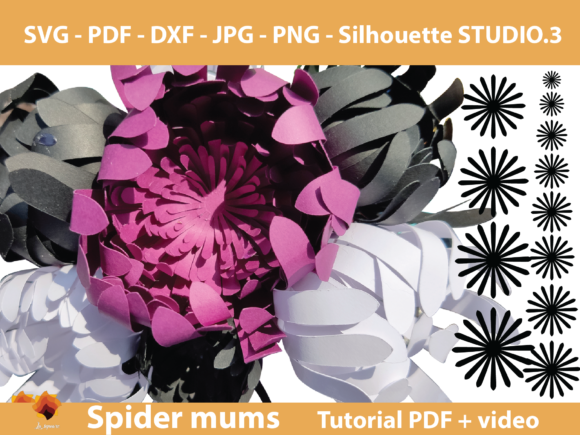
The Spider Mum (often associated with the Chrysanthemum family) is celebrated for its voluminous appearance. Unlike standard paper roses or tulips, which rely on simple folding techniques, a true Spider Mum requires precision engineering to achieve its signature "exploded" look. The purpose of using a 12-layer template is to replicate the natural density of the flower while maintaining the lightweight properties of paper.
Why does this matter? In modern event planning and interior design, there is a growing demand for oversized, statement pieces that photograph beautifully. A single large Spider Mum can serve as a dramatic focal point for a bridal arch, a photo booth backdrop, or a grand entrance. The significance lies in the versatility; these flowers can be crafted from various materials—crepe paper, tissue paper, or even fabric—making them suitable for both indoor and outdoor events when sealed properly.
Without a structured template, attempting to cut 12 layers of identical, interlocking petals is nearly impossible. The template ensures that every petal aligns perfectly, creating a symmetrical and balanced bloom that looks organic rather than mechanical.
The Evolution of Paper Flower Design
Gone are the days when crafters had to draw each petal by hand and cut it out individually. The integration of Digital Cutting Files has democratized complex design. Today, a crafter can produce a flower that once took a master artisan weeks to complete in just a few hours. This shift represents a broader trend in creativity: the fusion of traditional artistry with modern technology.
For educators and students, these templates offer an excellent lesson in geometry, spatial reasoning, and patience. By assembling the layers, learners visualize how two-dimensional shapes transform into three-dimensional objects, a concept fundamental to STEM education.
Decoding the Package: What You Get Inside
The 3D Spider Mum Package is designed to be all-encompassing, catering to users regardless of their preferred method of creation. When you acquire this listing, you are not just buying a single file; you are gaining access to a complete workflow solution.
The package typically includes:
- PDF Tutorial & Video: Visual guides are crucial for understanding the assembly process. A step-by-step video demonstrates how to glue the layers, manage the tension of the paper, and shape the final bloom.
- SVG Files: Optimized specifically for Cricut machines, these files allow for seamless cutting of intricate details.
- DXF Files: Compatible with Silhouette Studio and other vector-based software, ensuring cross-platform usability.
- PNG & JPG Images: High-resolution raster images available via download links. These are perfect for users who prefer hand-cutting or need reference images for tracing.
This variety ensures that whether you own a $200 electronic cutter or simply a pair of scissors and a printer, you have the resources needed to succeed.
Choosing Your Method: Digital vs. Hand Cutting
One of the most common questions beginners ask is, "Which format should I use?" The answer depends entirely on your equipment and desired efficiency.
Using SVG for Cricut Machines
If you are working with a Cricut Explore or Maker, the SVG format is your best friend. SVG stands for Scalable Vector Graphics, meaning the lines remain crisp at any size. For a complex design like the Spider Mum, which features over 100 individual cuts across 12 layers, the SVG format eliminates the risk of pixelation or blurry edges.
To use this effectively:
- Upload the SVG file directly into Cricut Design Space.
- Set the material type to match your paper (e.g., Cardstock, Crepe Paper).
- Send the job to the machine. The device will handle the intricate curves automatically, saving you hours of manual labor.
Utilizing DXF for Silhouette and Other Cutters
DXF (Drawing Exchange Format) is the industry standard for vector files used in Silhouette Studio and other cutting plotters. Like SVG, it allows for precise scaling. If you are a Silhouette user, downloading the DXF version ensures that the blade path is optimized for your specific machine settings, preventing the blades from getting stuck on tight corners.
Hand Cutting with PDF, PNG, and JPG
Not everyone owns a cutting machine, and that is perfectly fine. For PDF users, the package provides instructions to download JPG and PNG versions from the creator's drive. These formats are ideal for hand-cutting.
Here is how to proceed:
- Print: Print the pattern on standard letter or A4 paper. Ensure your printer settings are set to "Actual Size" to maintain scale.
- Trace: Place your paper over the printout and trace the petal shapes with a pencil.
- Cut: Use sharp scissors or a craft knife to cut along the traced lines.
While this method is more time-consuming, many crafters find the tactile experience of hand-cutting deeply meditative and satisfying. It also allows for subtle variations in each petal, giving the flower a slightly more organic feel.
Scalability: From XXS to XXXL
One of the most powerful features of vector-based templates is scalability. Because the design is based on mathematical vectors, you can resize the Spider Mum from a tiny XXS button flower to a massive XXXL installation piece without losing quality.
Practical Applications by Size:
- XXS to XS: Perfect for hair accessories, jewelry, or small boutonnières. These require minimal paper and can be assembled quickly.
- M to L: Ideal for table centerpieces, gift wrapping accents, or wall hangings. This is the standard size for most DIY projects.
- XL to XXXL: Used for stage backdrops, wedding arches, and storefront displays. Creating a giant Spider Mum requires layering multiple sheets or using larger rolls of paper, but the result is breathtaking.
When scaling up, remember to adjust your cutting machine settings or hand-cutting speed. Larger pieces may require sturdier adhesives to hold the weight of the paper layers together.
Clarifying Common Misunderstandings
There are several misconceptions about paper flower templates that often confuse new buyers.
Misconception 1: "I need expensive software to open these files."
This is false. While professionals might use Adobe Illustrator, the included SVG and DXF files are compatible with free versions of Cricut Design Space and Silhouette Studio Basic Edition. Furthermore, PNG and JPG files can be viewed and printed with any standard image viewer or web browser.
Misconception 2: "The tutorial is only for experts."
The included PDF tutorial and video are designed with beginners in mind. They break down the 12-layer assembly process into manageable steps, ensuring that even those with no prior experience can create a stunning flower.
Misconception 3: "You must use crepe paper."
While crepe paper is popular for its stretch, these templates work equally well with tissue paper, cardstock, vellum, or even fabric. The template defines the shape, not the material.
Integrating into Modern Creativity and Business
The availability of these templates reflects a shift in how we view creative work. In the modern economy, digital assets allow individuals to start businesses with low overhead. A crafter can purchase the 3D Spider Mum Template, print the files, and begin selling finished flowers online or locally within days.
In the educational sector, these projects foster fine motor skills and project management. Students learn to follow instructions, organize materials, and troubleshoot problems when a layer doesn't fit correctly. In the corporate world, such workshops are increasingly popular for team-building exercises, promoting focus and collaboration.
Conclusion
The 12-layer Spider Mum Paper Flower Template is more than just a collection of digital files; it is a gateway to limitless creativity. By offering compatibility with Cricut, Silhouette, and hand-cutting methods, it ensures that anyone with a passion for paper art can participate in the trend of large-scale floral design.
Whether you choose to cut with a machine for speed or hand-cut for tradition, the result is the same: a magnificent, multi-dimensional flower that brings color and joy to any space. With the support of detailed tutorials and scalable designs, you are equipped to create everything from delicate accessories to monumental installations. Embrace the technology, respect the craft, and let your imagination bloom.