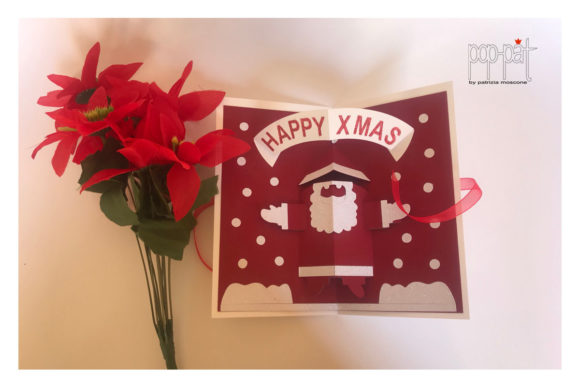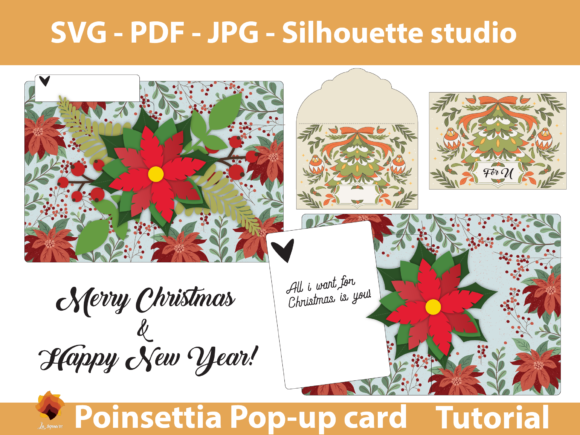
Poinsettia Pop-up 5x7 Greeting Card: A Strategic Asset for Holiday Production
The Poinsettia Pop-up 5x7 Greeting Card represents more than a simple festive template; it is a critical component in the workflow of creators who need to deliver high-quality, three-dimensional paper crafts efficiently. For professionals, small business owners, and hobbyists alike, the transition from a flat design concept to a finished physical product often involves significant time investment in cutting, scoring, and assembly. This specific 5x7in Poinsettia pop-up card template streamlines that entire process, allowing users to bypass the tedious trial-and-error phase of structural engineering and focus on execution, customization, and distribution.
In the context of holiday production cycles, time is the most valuable resource. The ability to generate consistent, complex pop-up mechanisms using pre-validated files ensures that quality control remains high even when production volumes spike during the Christmas and New Year seasons. Whether you are fulfilling orders for an online shop or creating personalized gifts for a corporate team, this package provides the foundational architecture necessary to scale your output without sacrificing the intricate details that make a pop-up card special.
Integrating the Template into Your Creative Workflow
Successful implementation of the Poinsettia Pop-up 5x7 Greeting Card begins with understanding where it fits within your existing digital and physical asset management systems. The package includes four distinct file formats—PDF, SVG, DXF, and JPG—each serving a specific role in the production pipeline. Recognizing which format to deploy at each stage prevents compatibility issues and reduces unnecessary file conversion errors.
For those utilizing vector-based cutting machines like Cricut or Silhouette, the SVG and DXF files are the primary drivers of efficiency. The SVG format is particularly optimized for Cricut Design Space, ensuring that layers remain editable and cut paths are precise. This allows designers to modify colors, resize elements, or adjust text before sending the job to the machine. Similarly, the DXF file offers robust compatibility with Silhouette Studio and other third-party software, making it an essential tool for cross-platform workflows. By having both formats available, you eliminate the bottleneck of software incompatibility, ensuring that your production line can switch between machines seamlessly if needed.
When working with standard PDF readers or preparing files for hand-cutting, the workflow shifts slightly. The included PDF serves as the master blueprint for layout and scoring lines. However, for users who prefer to print directly onto their cutting mats or need to trace manually, the JPG file acts as a versatile raster reference. It is important to note that for PDF users requiring the highest resolution image for printing or tracing, downloading the JPG from the provided drive link ensures you have access to the original source data rather than a compressed web version. This attention to file integrity is crucial for maintaining the sharpness of the poinsettia petals and the structural folds required for the pop-up mechanism.
Adapting Scale for Diverse Project Needs
One of the most significant advantages of this template is its scalability. The design logic allows the creation of flowers ranging from XXS to XXXL. This flexibility transforms the template from a single-use item into a versatile asset for various project types. A professional greeting card designer might use the standard 5x7 size for mass-produced holiday cards, while a craft educator could scale the design up to XXXL for a classroom demonstration or a large-scale wall installation.
This scalability requires careful planning regarding material selection. As the size increases, the weight of the paper must also increase to support the structural integrity of the pop-up mechanism. Using lightweight cardstock for a massive flower will result in a collapsed structure, whereas heavy stock for a miniature card may prevent the hinges from folding correctly. Understanding this relationship between scale and material is a key part of the implementation strategy. It allows creators to experiment with different aesthetics, such as using textured paper for larger versions or metallic foils for smaller, delicate accents.
Technical Implementation and Machine Compatibility
For the hands-on execution phase, the choice between hand-cutting and machine cutting dictates the preparation steps. While the template supports both methods, the efficiency gains from using a cutting machine cannot be overstated for repetitive tasks. When setting up the Poinsettia Pop-up 5x7 Greeting Card in your software, ensure that the "cut" and "score" lines are clearly distinguished. Most modern software allows you to assign different blade depths or settings to these lines, which is vital for preventing the paper from being cut through completely at the fold points.
If you are using a Cricut machine, the SVG file should be imported directly into Design Space. Before proceeding to the cut screen, verify that all layers are grouped correctly. Complex designs like pop-ups often rely on nested layers; if these are not aligned properly, the machine may attempt to cut the inner petals before the outer frame, leading to misalignment. The same principle applies to Silhouette Studio users working with the DXF file. Ensure that the "trace" or "weld" functions are used appropriately to merge overlapping shapes where necessary, preserving the continuity of the pop-up springs.
For those opting for manual precision, the JPG file downloaded from the drive serves as an excellent overlay. You can place the image under a sheet of tracing paper or translucent vellum to trace the cut lines. This method is ideal for artists who want to add a personal touch by hand-drawing details onto the petals before cutting. However, it is worth noting that hand-cutting significantly increases the time per unit. If your goal is volume production, investing time in mastering the machine workflow with the SVG or DXF files is the superior strategic move.
Quality Control and Consistency
p>To maintain high standards across multiple units, consistency in the cutting and folding process is paramount. The Poinsettia Pop-up 5x7 Greeting Card template provides a standardized set of instructions implicitly through its geometry. However, external factors such as humidity and paper grain direction can affect the final result. It is advisable to test a single prototype before committing to a full batch. This test run should evaluate the tension of the pop-up mechanism; if it opens too forcefully, the hinge may tear, but if it is too weak, the card may not stand upright.Organization plays a vital role here. Keep your workspace clean and label your materials according to the size and type required for the current project. Having the correct tools ready—such as bone folders for crisp creases and precision tweezers for handling small components—ensures that the assembly phase is smooth. The inclusion of the JPG file in the package also aids in organization, as it can be printed as a visual guide to keep near the cutting station, reducing the need to constantly open digital files and minimizing distractions.
Strategic Applications for Creators and Entrepreneurs
For entrepreneurs and small business owners, the Poinsettia Pop-up 5x7 Greeting Card is a tangible asset that enhances brand value. In a market saturated with flat, generic cards, offering a 3D pop-up experience creates a memorable unboxing moment. This differentiation can justify a higher price point and foster customer loyalty. By integrating this template into a broader product line, businesses can offer tiered options, such as a standard version for general customers and a premium, hand-decorated version for VIP clients.
Educators and bloggers can leverage this template to create engaging content around the holidays. Tutorials on how to assemble the pop-up mechanism provide high-value content that drives engagement and establishes authority in the crafting niche. The versatility of the design means that one tutorial series can cover everything from basic assembly to advanced customization techniques, appealing to a wide range of skill levels. Furthermore, the availability of multiple file formats makes the content accessible to users regardless of their technical proficiency or equipment ownership.
In the realm of marketing and event planning, these cards serve as powerful promotional tools. A company looking to send holiday greetings to partners can use the Poinsettia Pop-up 5x7 Greeting Card to leave a lasting impression. The effort required to produce a pop-up card signals a level of care and attention to detail that resonates with recipients. By planning ahead and utilizing the efficient workflow enabled by the SVG and DXF files, organizations can execute large-scale campaigns without overextending their resources.
Long-Term Value and Adaptability
The utility of this template extends beyond the immediate holiday season. Once mastered, the skills acquired in assembling the Poinsettia Pop-up 5x7 Greeting Card can be transferred to other projects. The principles of layering, scoring, and structural engineering learned here apply to a vast array of paper crafts, from wedding invitations to architectural models. The investment in learning the workflow now pays dividends in future productivity.
Furthermore, the digital nature of the assets ensures long-term usability. Unlike physical patterns that wear out or get lost, the PDF, SVG, DXF, and JPG files can be stored indefinitely and accessed whenever needed. This permanence allows creators to build a library of seasonal templates, creating a sustainable business model that relies on recurring revenue from digital products or custom services. By treating the Poinsettia Pop-up 5x7 Greeting Card as a core component of a scalable creative system, users can achieve greater efficiency and creativity in their work.