Santaclaus Pop Up: A Strategic Guide for Designers, Entrepreneurs, and Creators
The Santaclaus Pop Up is not merely a festive decoration; it is a sophisticated intersection of traditional holiday aesthetics and modern digital fabrication. For professionals in marketing, small business owners, and creative entrepreneurs, understanding the mechanics behind this design allows you to transform simple paper crafts into high-impact communication tools. Whether you are running a boutique, managing a brand's social media presence, or teaching a workshop on digital arts, mastering the Santaclaus Pop Up offers a tangible way to enhance customer experience and operational creativity.
This guide moves beyond basic instructions. We will explore how integrating SVG, DXF, PDF, and vector formats with platforms like Cricut Design Space, Silhouette Studio, and Scan-N-Cut can elevate your workflow. The goal is to help you make informed decisions about when and how to utilize these assets to achieve better results in branding, product development, and audience engagement.
Defining the Santaclaus Pop Up in a Professional Context
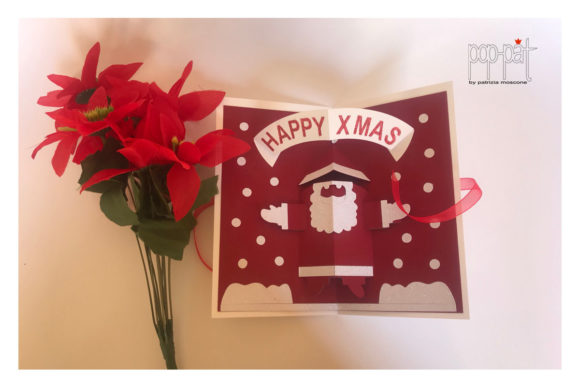
A Santaclaus Pop Up refers to a three-dimensional structure created from flat materials that expands into a sculptural form when manipulated. In the context of digital crafting, this involves precise vector files that dictate where cuts, folds, and score lines occur. Unlike standard 2D graphics, pop-up designs require an understanding of spatial geometry and structural integrity.
For the modern creator, the strategic value lies in the customization and scalability of these designs. When you possess a Santaclaus Pop Up file compatible with major cutting machines, you gain the ability to produce bespoke items at scale. This capability is crucial for:
- Brand Differentiation: Custom packaging or greeting cards that stand out in a saturated market.
- Operational Efficiency: Streamlining production by using pre-designed vectors rather than creating structures from scratch.
- Customer Engagement: Providing interactive unboxing experiences that encourage social sharing and brand loyalty.
By treating the Santaclaus Pop Up as a core component of your design strategy, you shift from being a passive consumer of holiday trends to an active architect of memorable experiences.
Technical Compatibility and Workflow Integration
The success of any pop-up project depends heavily on the compatibility between your design file and your hardware. The industry has standardized around specific file formats, each serving a distinct purpose in the production pipeline.
SVG (Scalable Vector Graphics) remains the gold standard for digital crafting. Because SVGs are resolution-independent, they allow you to resize a Santaclaus Pop Up from a miniature ornament to a large display piece without losing quality. This flexibility is essential for entrepreneurs who need to adapt their designs across various media, from business cards to window displays.
DXF (Drawing Exchange Format) is equally critical, particularly for users working with older machinery or those who prefer CAD-based workflows. It ensures that the geometric data remains intact during transfer, preventing alignment errors that could ruin the structural integrity of the pop-up mechanism.
PDF files offer a robust alternative for projects requiring print-ready precision. When using a Santaclaus Pop Up PDF, you often benefit from embedded layers that separate cut lines from score lines, making the preparation process more intuitive for both beginners and seasoned professionals.
Software ecosystems play a pivotal role in executing these designs effectively. Cricut Design Space provides a user-friendly environment for hobbyists and small business owners alike, offering features to easily manipulate and layer elements within a Santaclaus Pop Up project. Conversely, Silhouette Studio appeals to those who require advanced control over node editing and custom tool settings, allowing for intricate adjustments to the pop-up mechanisms.
Furthermore, the integration with Scan-N-Cut technology demonstrates the evolution of this field. By scanning physical sketches and converting them into editable vectors, creators can iterate on their Santaclaus Pop Up concepts rapidly. This hybrid approach bridges the gap between analog intuition and digital precision, fostering a more dynamic creative process.
Strategic Applications for Business and Education
The utility of a Santaclaus Pop Up extends far beyond the Christmas tree. For marketers and educators, these designs serve as powerful vehicles for storytelling and instruction. The tactile nature of pop-up art captures attention in ways that static images cannot, making it an ideal medium for conveying complex ideas or celebrating milestones.
Enhancing Customer Experience and Branding
In the realm of e-commerce and retail, the unboxing experience is a critical touchpoint. A Santaclaus Pop Up integrated into packaging transforms a routine transaction into an event. Consider a scenario where a small business owner sends holiday gifts to clients. Instead of a flat card, they include a folded paper element that reveals a 3D Santa figure upon opening. This unexpected delight reinforces brand recall and encourages word-of-mouth promotion.
When planning such initiatives, decision-makers must consider the cost-benefit analysis. While the initial investment in high-quality vector files and materials may seem higher than standard printing, the long-term ROI in terms of customer satisfaction and brand perception often justifies the expense. The key is intentionality; the Santaclaus Pop Up should align with your brand's voice and values, not feel like a generic afterthought.
Educational and Workshop Opportunities
Educators and freelance trainers can leverage the Santaclaus Pop Up to teach principles of engineering, design thinking, and spatial reasoning. By guiding students through the process of assembling a pop-up structure, instructors demonstrate how abstract mathematical concepts translate into physical reality.
For workshops targeting adults, the focus shifts toward productivity and creative problem-solving. Participants learn to troubleshoot issues such as misaligned cuts or weak fold lines, skills that are directly transferable to broader professional contexts. The use of compatible software tutorials ensures that attendees leave with actionable knowledge they can apply to future projects, whether personal or commercial.
Decision-Making Frameworks for Implementation
Before committing resources to a Santaclaus Pop Up project, it is vital to establish clear objectives. Randomly producing festive items without a strategic plan can lead to wasted time, materials, and missed opportunities. Use the following framework to evaluate your approach.
- Define the Goal: Are you creating these items for direct sales, internal team building, or client appreciation? Your answer dictates the level of complexity and the choice of materials.
- Assess Technical Requirements: Do you have access to the necessary software and hardware? If your team relies on Silhouette Studio, ensure your purchased files are formatted correctly. Avoid the risk of purchasing a Cricut-exclusive file if your workflow is built around Silhouette.
- Evaluate Scalability: Can the design be produced efficiently in bulk? A Santaclaus Pop Up that takes 30 minutes to assemble per unit may work for a limited edition run but will fail in a mass-market context.
- Analyze Risk Factors: What happens if the machine fails or the material is inconsistent? Always test a prototype before full production. Structural failures in pop-up designs can be frustrating and costly if discovered late in the process.
By adhering to this structured approach, you mitigate risks and ensure that every Santaclaus Pop Up you create contributes meaningfully to your broader goals. This methodical mindset distinguishes successful practitioners from casual hobbyists.
Risks of Unintentional Usage
One of the most common pitfalls in the crafting community is the assumption that "more is better." Without a clear context, a Santaclaus Pop Up can appear cluttered, poorly constructed, or irrelevant to the recipient. For example, using a highly detailed, multi-layered pop-up design for a simple thank-you note might overwhelm the message rather than enhance it.
Additionally, relying solely on pre-made templates without understanding the underlying mechanics can limit your ability to innovate. If you do not grasp how the folds interact, you may struggle to customize the design for different audiences. This lack of technical fluency can result in products that look amateurish, potentially damaging your professional reputation.
To avoid these pitfalls, invest time in learning the fundamentals of vector editing and paper engineering. Understanding the relationship between the Santaclaus Pop Up file format and the final output empowers you to make informed adjustments. This proactive stance ensures that your creations are not only visually appealing but also structurally sound and strategically aligned.
Optimizing Long-Term Results Through Intentional Design
The true power of the Santaclaus Pop Up lies in its potential to foster long-term relationships and sustainable growth. When used intentionally, these designs become part of a larger narrative that resonates with your audience. They signal that you care enough to put effort into the details, a sentiment that translates into trust and loyalty.
For entrepreneurs, this means viewing the Santaclaus Pop Up not as a one-off holiday gimmick but as a versatile asset. You can adapt the same vector files for birthday invitations, corporate events, or educational materials. The versatility of SVG, DXF, and PDF formats supports this adaptability, allowing you to pivot quickly based on changing market needs.
Moreover, the process of creating these designs enhances your own skills. As you refine your workflow in Cricut Design Space or Silhouette Studio, you develop a deeper appreciation for precision and efficiency. These skills are invaluable in any professional setting, from graphic design to project management.
In conclusion, the Santaclaus Pop Up represents a convergence of tradition and innovation. By approaching it with strategic foresight, technical competence, and a commitment to quality, you can unlock new avenues for creativity and business success. Whether you are a marketer seeking to differentiate your brand, an educator inspiring the next generation, or a creator looking to expand your portfolio, the thoughtful application of these designs offers a path to meaningful achievement.
Remember, the best results come from intentional action. Take the time to understand your tools, define your goals, and execute with precision. In doing so, you transform a simple paper craft into a powerful instrument for communication and connection.